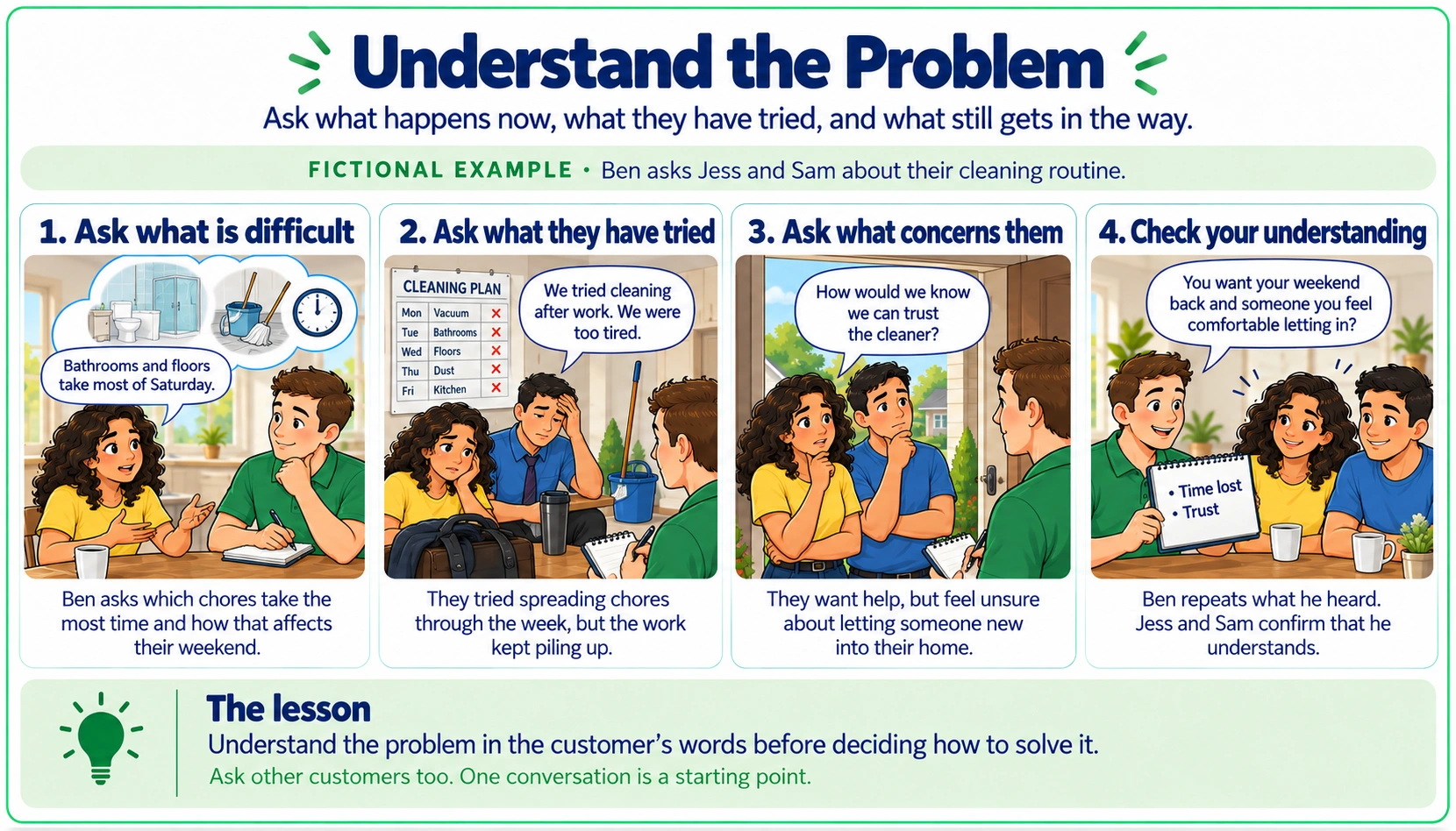
Ask what happens now, what they have tried, and what still gets in the way.
Fictional example: Ben asks Jess and Sam about their cleaning routine.
Ask what is difficult. Jess says, “Bathrooms and floors take most of Saturday.” Ben asks which chores take the most time and how that affects their weekend.
Ask what they have tried. Sam says, “We tried cleaning after work. We were too tired.” They tried spreading chores through the week, but the work kept piling up.
Ask what concerns them. Jess asks, “How would we know we can trust the cleaner?” They want help, but feel unsure about letting someone new into their home.
Check your understanding. Ben asks, “You want your weekend back and someone you feel comfortable letting in?” Ben repeats what he heard. Jess and Sam confirm that he understands.
The lesson: Understand the problem in the customer’s words before deciding how to solve it.
Ask other customers too. One conversation is a starting point.
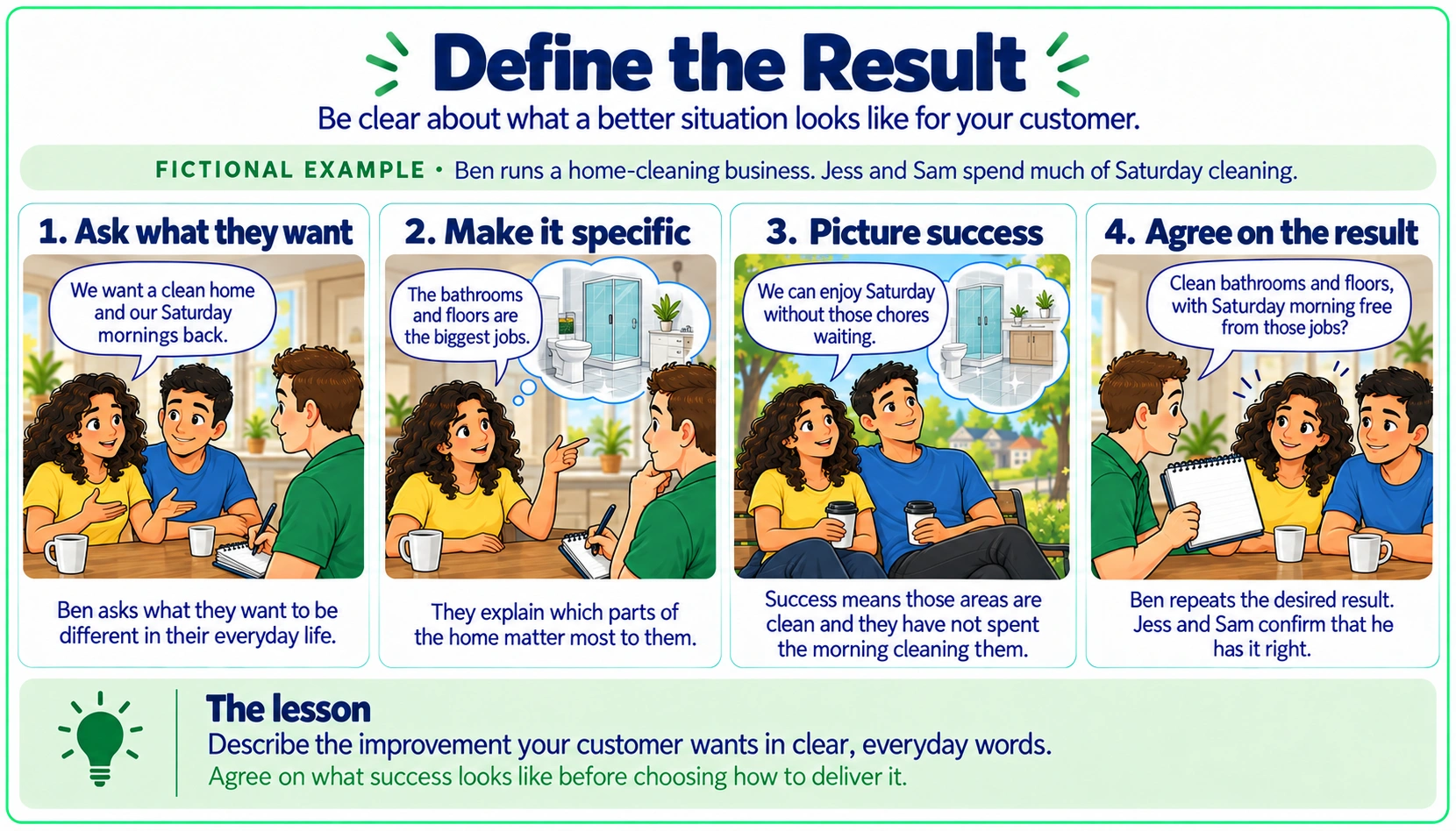
Be clear about what a better situation looks like for your customer.
Fictional example: Ben runs a home-cleaning business. Jess and Sam spend much of Saturday cleaning.
Ask what they want. Jess says, “We want a clean home and our Saturday mornings back.” Ben asks what they want to be different in their everyday life.
Make it specific. Jess says, “The bathrooms and floors are the biggest jobs.” They explain which parts of the home matter most to them.
Picture success. They say, “We can enjoy Saturday without those chores waiting.” Success means those areas are clean and they have not spent the morning cleaning them.
Agree on the result. Ben asks, “Clean bathrooms and floors, with Saturday morning free from those jobs?” Ben repeats the desired result. Jess and Sam confirm that he has it right.
The lesson: Describe the improvement your customer wants in clear, everyday words.
Agree on what success looks like before choosing how to deliver it.
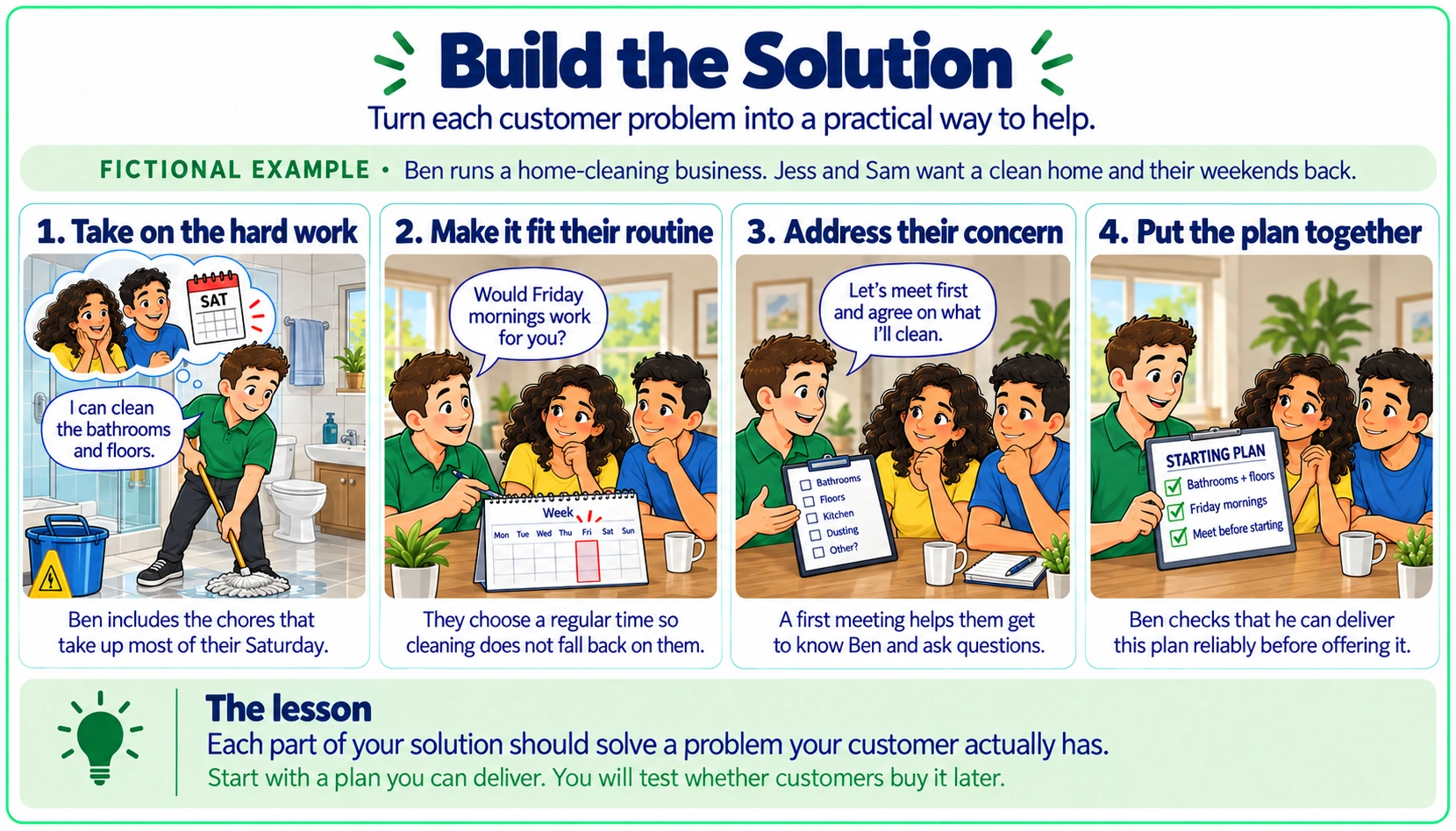
Turn each customer problem into a practical way to help.
Fictional example: Ben runs a home-cleaning business. Jess and Sam want a clean home and their weekends back.
Take on the hard work. Ben says, “I can clean the bathrooms and floors.” Ben includes the chores that take up most of their Saturday.
Make it fit their routine. Ben asks, “Would Friday mornings work for you?” They choose a regular time so cleaning does not fall back on them.
Address their concern. Ben says, “Let’s meet first and agree on what I’ll clean.” A first meeting helps them get to know Ben and ask questions.
Put the plan together. The starting plan includes bathrooms and floors, Friday mornings, and a meeting before starting. Ben checks that he can deliver this plan reliably before offering it.
The lesson: Each part of your solution should solve a problem your customer actually has.
Start with a plan you can deliver. You will test whether customers buy it later.
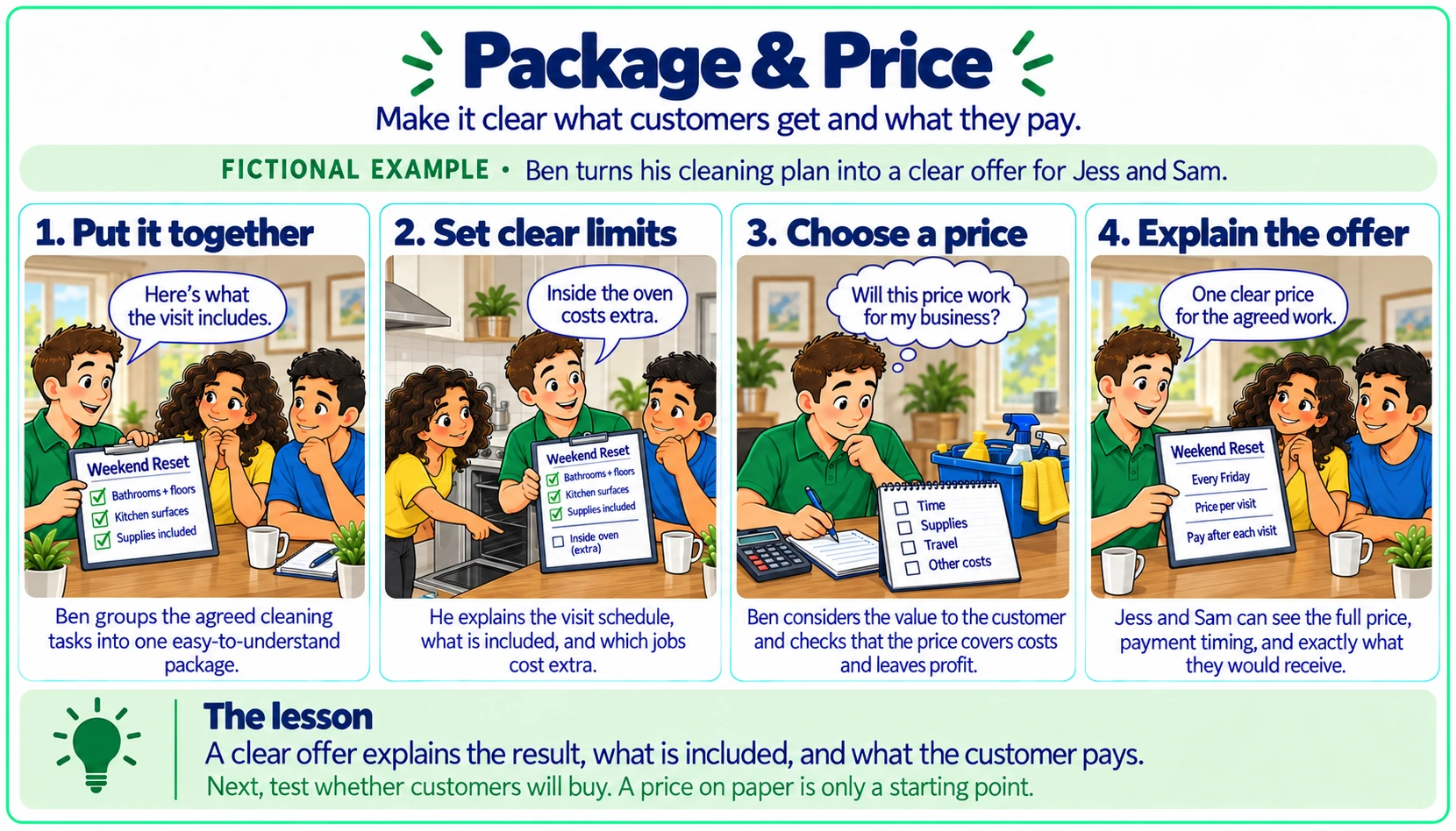
Make it clear what customers get and what they pay.
Fictional example: Ben turns his cleaning plan into a clear offer for Jess and Sam.
Put it together. Ben says, “Here’s what the visit includes.” His Weekend Reset package includes bathrooms and floors, kitchen surfaces, and supplies. Ben groups the agreed cleaning tasks into one easy-to-understand package.
Set clear limits. Ben says, “Inside the oven costs extra.” He explains the visit schedule, what is included, and which jobs cost extra.
Choose a price. Ben asks himself, “Will this price work for my business?” He considers time, supplies, travel, and other costs. Ben considers the value to the customer and checks that the price covers costs and leaves profit.
Explain the offer. Ben says, “One clear price for the agreed work.” The offer states every Friday, a price per visit, and payment after each visit. Jess and Sam can see the full price, payment timing, and exactly what they would receive.
The lesson: A clear offer explains the result, what is included, and what the customer pays.
Next, test whether customers will buy. A price on paper is only a starting point.
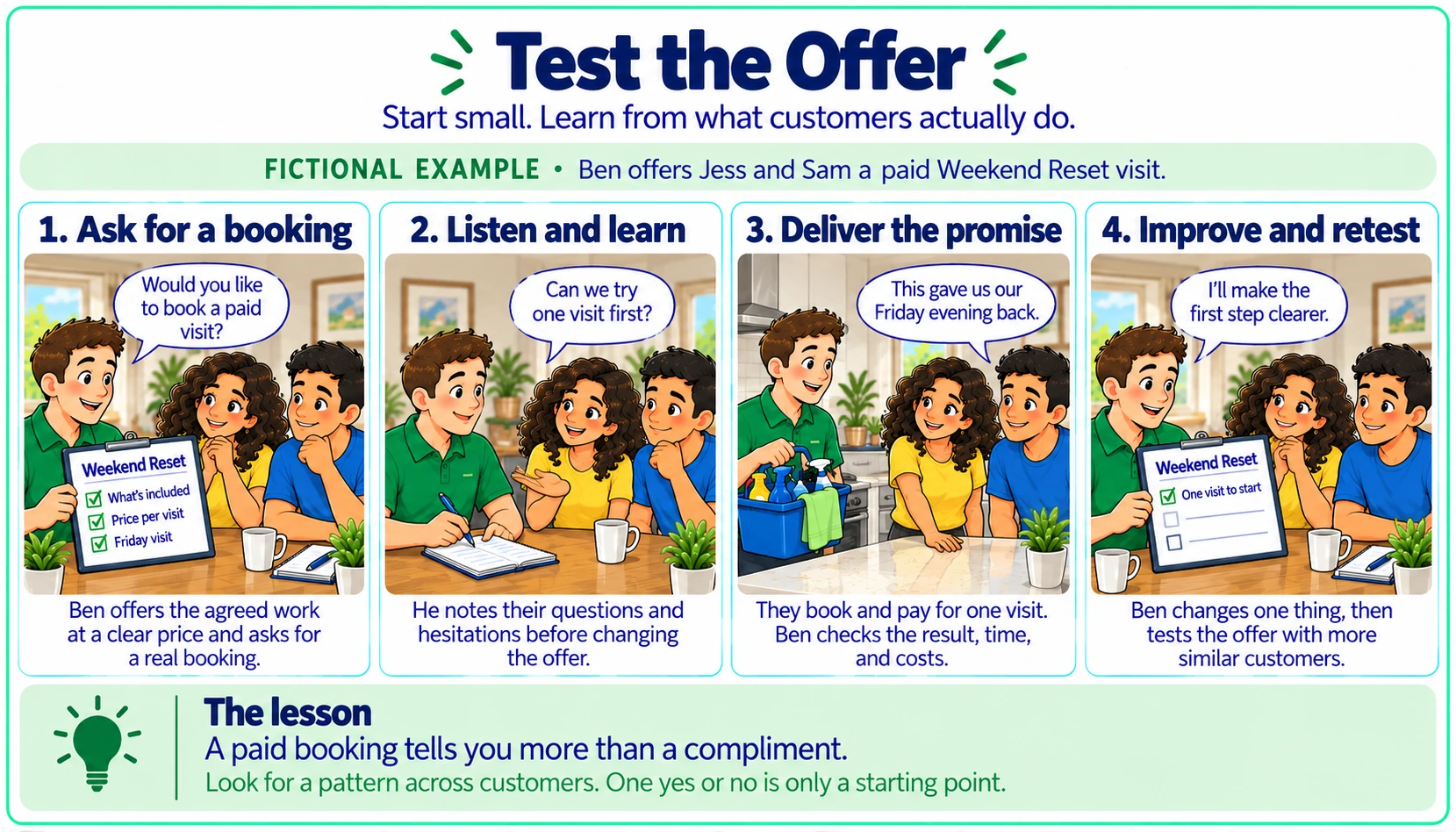
Start small. Learn from what customers actually do.
Fictional example: Ben offers Jess and Sam a paid Weekend Reset visit.
Ask for a booking. Ben asks, “Would you like to book a paid visit?” His Weekend Reset offer states what is included, the price per visit and a Friday visit. Ben offers the agreed work at a clear price and asks for a real booking.
Listen and learn. Jess asks, “Can we try one visit first?” He notes their questions and hesitations before changing the offer.
Deliver the promise. Sam says, “This gave us our Friday evening back.” They book and pay for one visit. Ben checks the result, time, and costs.
Improve and retest. Ben says, “I’ll make the first step clearer.” He adds “One visit to start” to the offer. Ben changes one thing, then tests the offer with more similar customers.
The lesson: A paid booking tells you more than a compliment.
Look for a pattern across customers. One yes or no is only a starting point.